A HELPFUL guide TO richmond, VirginiA
From one transplant to another
How to Build Your Village After Moving to Richmond
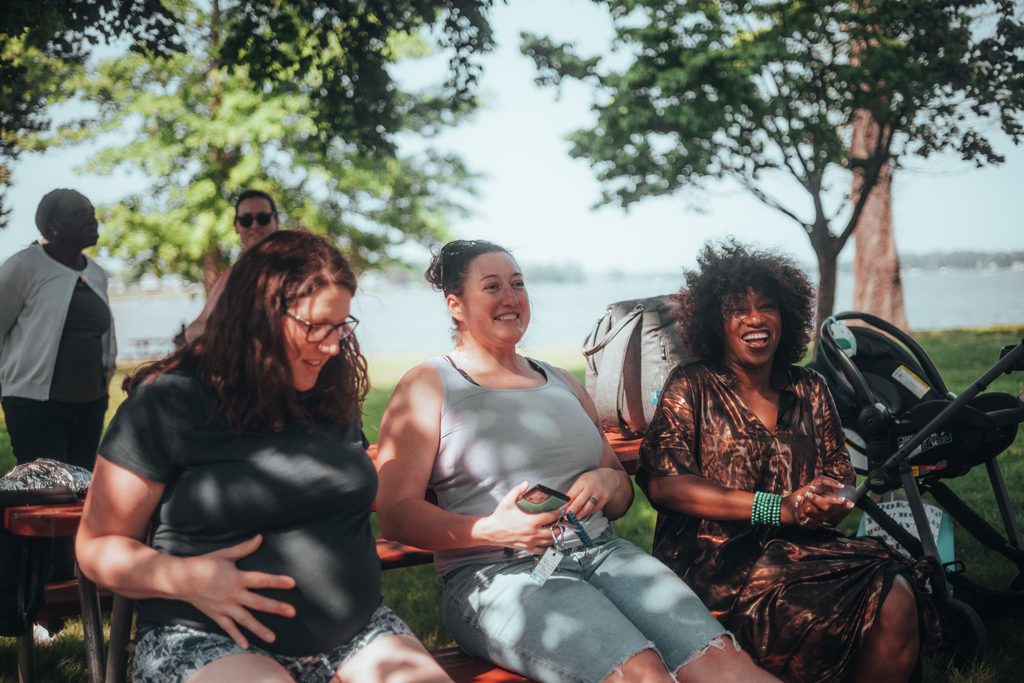
Moving to Richmond can give your family a new home, a new neighborhood and a very long list of new places to try.
What it does not automatically give you is a village.
You can find a pediatrician. You can learn which Target has the layout you prefer. You can develop strong opinions about which route across the river is least annoying. But finding the people you can text for a playground meetup, a coffee run or help when the week completely falls apart takes longer.
And if you are a mom, making friends in a new city can feel weirdly similar to dating—except everyone is tired, someone is usually holding a snack cup and plans depend on nap schedules.
The good news is that Richmond is full of families looking for the same thing: connection that feels easy, genuine and close enough to fit into real life.
You do not need to become the most outgoing person in the room or fill every weekend with activities. Building a village usually happens through small, repeated interactions—not one magical event where you instantly meet your five new best friends.
Here is how to start.
1. Begin with the life you already have
When people want to make friends after moving, they often look for an entirely new social life. A better place to begin is with the routines already on your calendar.
Where are you naturally going each week?
- Daycare or preschool pickup
- The playground
- Library programs
- A fitness class
- Church or another faith community
- Swim lessons, music classes or youth sports
- A neighborhood coffee shop
- The school bus stop
- Your regular walking route
These places work because you do not have to create extra time to attend. You are already there, and repeated proximity gives a friendship room to develop without forcing it.
Choose one or two parts of your routine where you regularly see the same people. Then resist the temptation to try twelve different programs in twelve different places. Familiarity is useful. Going to the same playground on Saturday morning or the same library program each week makes it much easier to move from recognizing someone to actually talking to them.
2. Become a regular somewhere
Community rarely forms when you visit a place once.
Pick one location that fits your family and return at roughly the same time. It could be your closest library, a neighborhood park, a coffee shop with room for children or a recurring class.
The Richmond area has several public library systems with ongoing children’s and family programming. Richmond Public Library offers events across its city locations, while Henrico County Public Library and Chesterfield County Public Library maintain their own family calendars and programs.
These are not just ways to entertain your children. They are places where you are likely to encounter the same families repeatedly.
The first visit may involve nothing more than a smile. The second time, you may recognize each other. By the fourth, it feels normal to say, “I think our kids have decided they’re friends.”
That is often how a village starts—not dramatically, but through seeing the same face enough times to begin a conversation.
3. Use the easiest possible opening line
You do not need an impressive introduction. Parents have built-in conversation material everywhere.
Try:
- “How old is yours?”
- “Have you been to this class before?”
- “Do you know any other good playgrounds around here?”
- “We’re still learning Richmond—what do you like doing with your kids?”
- “Your child and mine seem to have formed an alliance.”
- “Is that coffee good? I need guidance.”
If you recently moved, say so. “We just moved to Richmond and are trying to find our people” is both honest and surprisingly effective. It gives the other person an easy way to recommend places, share local knowledge or mention that they are also looking for more mom friends.
Most parents are not waiting for you to say something clever. They are waiting to see whether you seem kind and normal enough to talk to while a child removes both shoes for no apparent reason.
4. Join something built for repeat connection
Large one-time events can be fun, but they are not always the easiest places to make friends. You may exchange a few sentences with six people and leave without knowing whether you will see any of them again.
Look for groups that meet repeatedly and give you a reason to return.
That could include:
- A neighborhood association
- A parent or caregiver group
- A faith-based group
- A recurring volunteer opportunity
- A walking group
- A book club
- A fitness class series
- A preschool or school parent group
- A local moms’ meetup
I run The Mom Walk Collective – Richmond, where moms can walk, talk and meet other women without the pressure of a formal event. You do not need to arrive with a friend, be at a particular fitness level or have your life remotely together. The point is simply to make it easier for Richmond moms to find one another.
I also created RVA Mom Guide: Coffee & Hang that will be starting soon, as a small, relaxed gathering for local moms. It is designed for the person who wants to meet people but does not necessarily want to enter a room of 100 strangers and “network.” Coffee and normal conversation are plenty.
Whatever you choose, give it more than one attempt. The first visit is often the most uncomfortable because everyone else appears to know one another. Sometimes they do. Often, they just met twenty minutes before you arrived.
5. Turn a pleasant conversation into an actual plan
This is the step where many potential friendships stall.
You meet another mom. The conversation is easy. Your children play well together. You both say, “We should do this again.” Then no one does anything because exchanging contact information somehow feels like a major emotional risk.
Make the next step small and specific:
- “We usually come here around ten on Fridays. Want to meet next week?”
- “I was planning to try that storytime Tuesday. Do you want to go together?”
- “Would you like to exchange numbers in case we’re both here again?”
- “I’m going to send you that playground I mentioned.”
Specific plans are easier to accept than a vague promise to hang out someday. Choose something short, public and child-friendly so neither person feels trapped in an all-day commitment.
If the first invitation does not work, do not immediately assume the person is uninterested. Family calendars are chaos. Offer another simple option—or leave the door open and continue being friendly when you see each other.
6. Look closer to home than you think
One of the most helpful people in your village may live three doors away.
Neighborhood friendships are particularly valuable because they work on ordinary days. These are the people who can join you for a last-minute walk, tell you why the street is suddenly full of cars or bring in a package while you are away.
Start with low-pressure opportunities:
- Spend time in the front yard or on the porch
- Walk the neighborhood at consistent times
- Introduce yourself when you see another family outside
- Attend neighborhood events or meetings
- Join the neighborhood’s online group, if it is active and useful
- Ask whether nearby families want to meet at a park
- Offer extra garden produce, moving boxes or outgrown kids’ items
You do not need to become best friends with every neighbor. Simply knowing a few names can make a new place feel much more like home.
This is also why I encourage families choosing a Richmond neighborhood to think beyond the house itself. Your daily routes, nearby gathering places and the way people use the street can all affect how easy it is to build community.
7. Let your children create the opening—but choose the adults you enjoy
Children are excellent social icebreakers. They are less reliable friendship matchmakers.
It is wonderful when your kids enjoy each other, but you are also allowed to look for parents whose company feels comfortable to you. The goal is not to schedule endless playdates with someone you find exhausting simply because your children once shared a shovel.
Pay attention to the adults who make you feel at ease. Can you talk without performing? Do they seem kind? Do your approaches to time, communication and children fit reasonably well? Would you want to meet them for coffee even if the kids were not present?
The strongest family friendships often work on both levels: the kids have fun, and the adults leave feeling better rather than depleted.
8. Create the invitation you wish someone else would make
You do not have to wait for an established group to include you.
If you notice several parents you enjoy seeing, create something simple:
- Saturday playground at 9:30
- Stroller walk after preschool drop-off
- Coffee while the babies roll around on a blanket
- Pizza in the backyard
- Library meetup followed by snacks
- A monthly family picnic
- A casual “bring whatever your child will actually eat” dinner
Keep the invitation specific and low-effort. “We’ll be at the playground Saturday from 9:30 to 10:30 if anyone wants to join” feels much easier than hosting an elaborate event.
The first gathering may include two families. That still counts. Small groups are often where real conversations happen.
You also do not need a spotless home before inviting someone over. Other parents are not shocked by toys, dishes or laundry. They also live with children.
9. Follow up sooner than feels necessary
Friendships are often lost in the space between “That was fun” and “We should do it again.”
Send the text.
“We had such a good time today. Want to try the playground next Thursday?”
If someone mentioned a hard week, check in. If they recommended a local business, tell them when you try it. If you see an event that made you think of them, send it.
These tiny follow-ups communicate something important: I enjoyed meeting you, I remembered what you said and I am open to becoming actual friends.
Friendship does not require constant messaging. It does require someone to keep the thread from disappearing.
10. Give the process more time than you think it should take
This may be the least satisfying advice, but it is true.
Building a village takes repetition. You may meet many perfectly nice people before finding the ones who become part of your real life. Some friendships will remain playground friendships. Others will slowly become the people you call when you need advice, company or someone who understands why this particular Tuesday has defeated you.
Do not use your first few lonely weeks as evidence that moving was a mistake or that everyone else already has enough friends.
Many Richmond moms who appear settled are also hoping someone will invite them for coffee.
Keep showing up. Keep making the small invitation. Keep returning to the places that feel right.
A simple 30-day Richmond village plan
If you want a practical place to begin, try this:
Week 1: Choose your places
- Find your closest library and check its event calendar
- Choose one park or playground you would visit regularly
- Join one Richmond-area parent or neighborhood group
- Subscribe to a reliable local family-events guide
Week 2: Show up twice
- Attend one recurring activity
- Return to the same park, class or coffee shop at a similar time
- Introduce yourself to one person
Week 3: Make one small invitation
- Ask someone to meet at a playground, walk or library program
- Attend a Mom Walk, Coffee & Hang or another repeating local gathering
- Exchange contact information with one person you enjoyed meeting
Week 4: Follow up
- Send one “Want to do this again?” text
- Try one neighborhood event or local class
- Put the next meetup on the calendar before the month ends
That may not create an entire village in thirty days. It will create momentum—and momentum matters.
Where to start meeting families around Richmond
Here are a few low-pressure starting points:
- Richmond Public Library: Family programs, children’s events, storytimes and activities across city branches
- Henrico County Public Library: Children’s programs and events at locations throughout Henrico
- Chesterfield County Public Library: Family programming and community events throughout Chesterfield
- Local small businesses for kiddos: Trail Kids, Toddler Tribe, Bella Ballerina
- The Mom Walk Collective – Richmond: Casual walks created to help moms connect
- RVA Mom Guide: Coffee & Hang: Small, relaxed meetups for Richmond-area moms
- RVA Mom Guide: A weekly roundup of local family activities, events and helpful finds
- Your neighborhood: The closest and most overlooked source of everyday community
Schedules and registration requirements can change, so check each organization’s current calendar before heading out.
Finding your people is part of finding home
A house can check every box and still take time to feel like home.
Home is also knowing which park saves the afternoon. It is recognizing another parent at the library. It is having someone nearby who can meet you for coffee with twenty minutes’ notice—or three days’ notice, because everyone has children and spontaneity is relative.
That is a big part of why my work in Richmond has grown beyond helping families buy and sell houses. Through real estate, RVA Mom Guide and Mom Walk Richmond, I get to help families find their home, their people and their fun.
If you are new to Richmond—or you have lived here for years but still want more community—you are welcome here.
Looking for your people in Richmond?
Subscribe to RVA Mom Guide for a weekly list of family-friendly events, local finds and easy reasons to get out of the house.
Want to meet other local moms in person? Join the invite list for RVA Mom Guide: Coffee & Hang or find an upcoming Mom Walk Richmond gathering.
Thinking about moving in or around Richmond? [Schedule a no-pressure neighborhood brainstorm] and we can talk through the areas that fit your family’s real routines—not just your home-search filters.



PLEASE COMMENT BELOW